
sharing is caring
The MAp Book Club returns with a title that challenges the way we think about everyday choices. Because what better way to kick things off than with a book that makes you question your coffee, your clothes, your emails... and yes, your bananas.
Mike Berners-Lee’s How Bad Are Bananas? is everything a climate book should be: smart, practical, un-preachy – and full of eyebrow-raising facts that shift your perspective and your choices.

We know that flying is bad for the planet. We’ve heard about plastic waste. But how much carbon does it take to send a text? Or to make a pair of jeans?
How Bad Are Bananas? is one of those books that leaves you staring into your cup of coffee, wondering what invisible impact it carries.
It’s not about doing less – it’s about doing things smarter. With surprising comparisons and jaw-dropping carbon maths, Berners-Lee helps us to understand what really matters in the climate conversation. Spoiler: it’s not the banana.
CO₂ – carbon dioxide – is one of the major greenhouse gases driving climate change. It’s released when we burn fossil fuels like oil, gas or coal – and through the things we produce, consume and waste.
To compare emissions from different sources, we use a standard measure called CO₂e – carbon dioxide equivalent – which includes other powerful gases like methane and nitrous oxide. The numbers, shown in grams (g), kilograms (kg) or tonnes (t), help us to comprehend the climate cost of each action.
For reference:
How Bad Are Bananas? doesn’t overwhelm you with stats – it tells carbon stories in g, kg and tonnes. A tangible, readable way to rethink our everyday choices.
Some things are as bad as you thought (beef, frequent flying). Others are worse. And the rest? Far more innocent than you’d imagine.

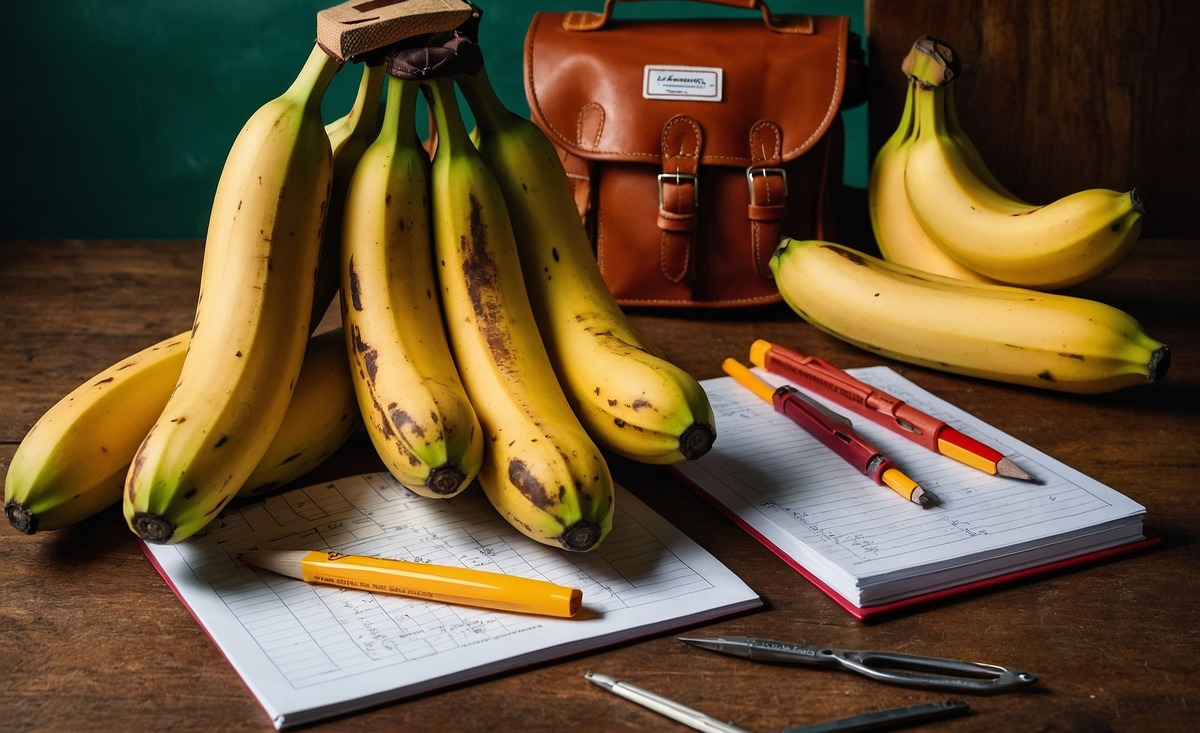
#1: Bananas aren’t that bad – but wasting them is. One banana has a surprisingly low footprint: around 110 g CO₂e – that’s about the same as a kilometre in a car or a cup of oat milk coffee. But throw it away, and that footprint becomes avoidable. Globally, food waste accounts for up to 10% of all emissions.
#2: Buying new tech has a higher footprint than using it. A single smartphone generates 55-95 kg CO₂e during its production – the same as driving 400-700 km. Most of the footprint happens before you even switch it on. Keeping your phone for just one more year makes a measurable difference.
#3: A simple t-shirt = 4 kg, jeans = 30+ kg CO₂e. A basic cotton T-shirt emits around 4 kg CO₂e. A pair of jeans? Due to water-hungry cotton, dyeing and global transport, over 30 kg CO₂e – about the same as a domestic flight. The carbon impact of the fashion industry is bigger than all international flights and shipping combined.
#4: A text message? Nearly nothing. A Google search? Adds up fast. One SMS emits only 0.014 g CO₂e – practically nothing. But a single email with a large attachment? Around 50 g CO₂e – the same as driving 400 metres. Multiply that across your inbox, team and organisation, and it starts to matter.
#5: Trains are greener – but not always. Yes, trains are generally more climate-friendly (and far safer) than cars. But if just two people are travelling together, driving an efficient car can have a lower footprint than taking a first-class train.
#6: A bouquet a week? A tonne of trouble. A weekly bouquet of out-of-season, flown-in flowers can add up to 1.5 tonnes of CO₂e per year. Grown with artificial heat or flown across continents – either way, it’s bad news for the climate.
#7: War is the most carbon-intensive human activity. Military operations and infrastructure have some of the highest emissions on the planet – yet they’re rarely discussed. It’s a sobering reminder that peace and sustainability are profoundly interconnected – and that a just, liveable future requires both.
“But compared to 2010 I feel more hope, more fear and a good deal more urgency.”
If you see air-freight, avoid it. Vegan beats vegetarian for the climate. And when it comes to beef, lamb or hothouse-grown produce – think red flags, not green choices.
How Bad Are Bananas? flips our understanding of climate impact on its head. It’s not about guilt – it’s about clarity. It shows us where we can make meaningful changes without losing our minds (or our love for bananas).
At MAp, we believe that better decisions start with better questions. This book gives us exactly that. Questions that make us pause, reflect and choose better – not with pressure, but with purpose.
Sustainability isn’t just a checklist. It’s a mindset. One that asks: How bad is it? And MAps out a better way forward.
#onwards
Your MAp team

 ke time for prosecco ke it happenke it meaningfulke good coffeeke it matterke funny jokeske it kindke it simpleke it count
Sign up for the MAp newsletter for practical insights on hotel branding, marketing, and sustainability, plus fresh thinking from our projects and new tools from our sustainability platform. Let’s move #onwards together.